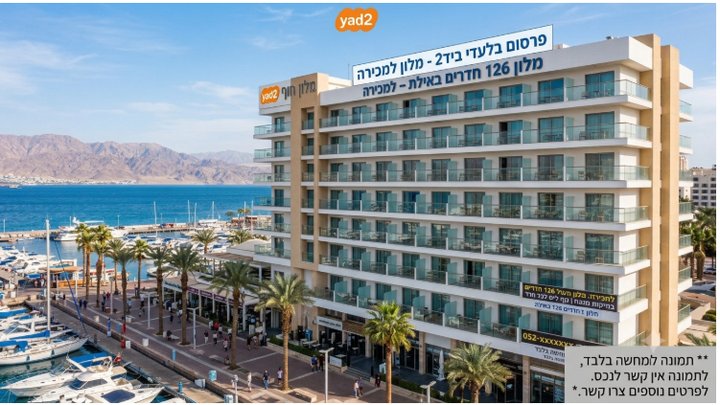
Eilat Hotel Taxation: Understanding Capital Gains and Purchase Taxes for Investors

Introduction to Eilat's Commercial Real Estate Market
Welcome to the definitive guide on commercial real estate taxation in Israel's premier resort city. With 12 years of brokerage experience, I navigate Eilat's complex market, connecting investors with high-yield properties like active hotels, boutique hospitality businesses, and luxury vacation complexes. Investing in Eilat offers unparalleled growth but requires a deep understanding of regulatory and financial frameworks. Positioned on the Red Sea, Eilat draws millions of tourists annually, creating robust demand for hospitality real estate. Acquiring or disposing of a hotel involves intricate legal procedures, extensive due diligence, and comprehensive knowledge of local tax codes. To maximize ROI, mastering property taxation is as critical as selecting the right location.
The Fundamentals of Hotel Real Estate Taxation in Israel

Grasping the framework of hotel real estate taxation in Israel is critical. Unlike residential real estate, which benefits from exemptions and lower tax brackets to encourage homeownership, commercial properties are treated strictly as business assets. This classification alters how the Israel Tax Authority assesses properties during acquisition and disposition. Understanding hotel taxation requires a corporate lens. Hotels are income-producing assets generating revenue through room bookings, food and beverage services, and event hosting. Consequently, the taxation framework considers the property's income-generating ability, depreciation, and the owning entity's corporate structure. Investors must decide whether to purchase real estate directly as individuals, through an Israeli limited liability company, or via a foreign corporate entity. Each structure triggers different tax implications and compliance obligations. Furthermore, Eilat holds special status as a Free Trade Zone. While providing significant Value Added Tax (VAT) benefits for locally consumed goods and services, real estate transactions and commercial property taxes still follow strict national guidelines. Navigating the intersection of Eilat's unique economic status and national tax laws makes specialized brokerage and expert legal counsel indispensable.
Understanding Purchase Tax on Buying a Hotel

When acquiring a hospitality property, investors encounter the first major tax milestone: the purchase tax on buying a hotel. In Israel, this purchase tax is levied on the buyer as a mandatory transaction component. For commercial properties like hotels, it is generally calculated at a flat rate, unlike the progressive tiered system for residential homes. Calculating purchase tax on buying a hotel is based on the total transaction value. It is crucial to distinguish between the real estate's value and the value of business operations, goodwill, and movable assets (such as furniture, industrial kitchen equipment, and shuttles). Strategic investors work with appraisers and tax attorneys to accurately allocate the purchase value between tangible real estate and the operational business. Proper allocation optimizes the tax burden, as this tax specifically targets the real estate component. Before transacting, investors must conduct thorough due diligence, including verifying zoning permits, ensuring no outstanding municipal debts, and confirming safety compliance. For a comprehensive breakdown, read our detailed guide on How to Buy a Hotel in Eilat: A Smart and Profitable Investment Guide. This resource provides invaluable insights into structuring a smart, profitable hotel investment.
Navigating Capital Gains Tax on Hotel Sales
During asset disposition, selling a hotel at a profit subjects investors to capital gains tax on the sale, known as מס שבח על מכירת בית מלון. Levied on the seller, this tax is calculated based on the property's net value appreciation from purchase to sale, adjusted for inflation and allowable deductions. Optimizing מס שבח על מכירת בית מלון is complex. The Israel Tax Authority allows sellers to deduct expenses incurred during the holding period that enhanced the property. Deductible expenses include major renovations, structural additions, legal fees, brokerage commissions, and specific financing costs. By meticulously documenting these improvements, property owners can significantly reduce taxable gains. To understand the broader context, looking at international definitions helps. When researching capital gains tax on real estate, we find a clear baseline: Capital gains tax is a type of tax on profits earned from the sale of assets like stock or real estate. In 2024, the rates for long-term capital gains are 0%, 15% or 20%; which rate you pay depends on your income level. While these percentages reflect the United States tax code, the fundamental principle remains identical in Israel: the tax applies strictly to the profit, not the total sale revenue. For investors exiting the market, strategic planning is essential. Selling an operational hotel requires a different approach than selling an empty commercial building. To explore the best tactics for a successful exit, review our insights on Selling a Hotel Business in Eilat: Strategies for Hotels and Empty Properties.
International Perspectives on Property Taxation
Foreign investors often compare the Israeli tax system with their home countries. The hospitality sector is a global asset class, and tax obligations vary widely. International buyers turn to online financial communities to understand how vacation properties and hospitality businesses are taxed globally. For example, a common query leads investors to discussions about capital gain tax from sale of vacation home, where it is noted that "The page is titled 'Capital Gain Tax from sale of vacation home and normal income tax rate'." This global perspective highlights why foreign investors must seek localized expertise. A broker with deep roots in Eilat bridges the gap between international expectations and local Israeli tax realities, ensuring foreign capital is deployed efficiently and in compliance with national laws.
Strategic Planning for Hotel Investments in Eilat
Successful real estate investment in Eilat's hospitality sector requires a holistic strategy incorporating tax planning, operational management, and market positioning. One primary strategy for mitigating tax liabilities utilizes corporate structures. Many investors choose to buy the shares of the company owning the hotel rather than buying the real estate directly. This transaction, known as a share deal, has entirely different tax implications compared to an asset deal. While an asset deal triggers standard real estate purchase taxes, a share deal might be subject to different corporate tax regulations. Choosing the right path requires collaboration between your broker, tax advisor, and corporate lawyer. Furthermore, investors must consider the hotel's operational model. Whether managed by an international brand or run as an independent boutique operation, the model affects the property's valuation and tax assessment. For a curated list of current market opportunities, explore Hotels for Sale: Attractive Real Estate Opportunities in Eilat and Israel, showcasing the diverse range of assets available in this unique location.
Qualitative Comparison: Hotel Assets vs. Residential Properties
To clarify the landscape, it is helpful to compare the qualitative aspects of investing in a hotel versus a standard residential property. The table below outlines the key differences in how these assets are treated from a regulatory and operational standpoint.
Feature Hotel / Commercial Real Estate Residential Real Estate
Primary Tax Classification Business asset subject to commercial tax rates Private asset with potential residential exemptions
Purchase Tax Structure Generally a flat commercial rate Often progressive, based on ownership status
Capital Gains Exemptions Rare; heavily dependent on corporate structure Common for single-home owners meeting specific criteria
Depreciation Can be actively depreciated over time to offset income Generally not applicable for private non-rental use
Operational Complexity High: requires staff, licenses, and active management Low: standard tenant-landlord relationship
Value Appreciation Driver Driven by business revenue, cap rates, and tourism trends Driven by local housing demand and neighborhood development
This comparison underscores why commercial real estate, particularly in the hospitality sector, demands a professional approach. The potential for high returns correlates directly with the complexity of managing the asset and its associated tax liabilities.
Conclusion: Maximizing Profitability in Eilat's Hotel Market
Investing in Eilat's hotel industry is a sophisticated endeavor offering substantial rewards for those who navigate it correctly. Understanding the intricacies of hotel real estate taxation in Israel is the foundation of a sound investment strategy. From initially calculating the purchase tax on buying a hotel to the final exit strategy involving capital gains tax on hotel sales, every step requires precision, foresight, and professional guidance. With 12 years of brokerage experience, my mission is to provide investors with the clarity and exclusive access needed to succeed in Eilat's premium property market. By partnering with experienced professionals and leveraging deep local knowledge, you ensure your hospitality investment is compliant with all tax regulations and optimized for maximum long-term profitability.
שאלות ותשובות
In Israel, hotel real estate is primarily classified as a business asset, which means it is subject to commercial tax rates. This contrasts with residential real estate, which is considered a private asset and may benefit from potential residential exemptions and lower tax brackets designed to encourage homeownership. The classification of hotels as income-producing assets means their taxation framework considers factors like revenue generation, depreciation, and the owning entity's corporate structure, unlike private residential properties. This distinction is critical for investors to understand, as it significantly alters how the Israel Tax Authority assesses properties during acquisition and disposition.
When acquiring a hotel in Israel, purchase tax is levied on the buyer as a mandatory transaction component. For commercial properties like hotels, this tax is generally calculated at a flat rate, differing from the progressive tiered system used for residential homes. The calculation is based on the total transaction value. It is crucial for investors to accurately distinguish between the value of the real estate itself and the value of business operations, goodwill, and movable assets such as furniture or equipment. Strategic investors work with appraisers and tax attorneys to accurately allocate the purchase value between tangible real estate and the operational business, as proper allocation optimizes the tax burden, given that the purchase tax specifically targets the real estate component.
Capital gains tax on hotel sales in Israel, known as מס שבח על מכירת בית מלון, is levied on the seller when a hotel is sold at a profit. This tax is calculated based on the property's net value appreciation from the time of purchase to the time of sale, with adjustments for inflation and allowable deductions. To optimize this tax, sellers can deduct expenses incurred during the holding period that enhanced the property. These deductible expenses include major renovations, structural additions, legal fees, brokerage commissions, and specific financing costs. Meticulously documenting these improvements can significantly reduce the taxable gains, ensuring that the tax applies strictly to the profit, not the total sale revenue.
In Eilat, investors can choose to buy the shares of the company owning a hotel (a share deal) rather than purchasing the real estate directly (an asset deal). These two transaction types have entirely different tax implications. An asset deal typically triggers standard real estate purchase taxes, which are levied on the real estate component. In contrast, a share deal might be subject to different corporate tax regulations, as it involves the transfer of company ownership rather than direct property ownership. Choosing the right path requires careful collaboration between your broker, tax advisor, and corporate lawyer to ensure compliance and optimize tax liabilities, as each structure triggers different tax implications and compliance obligations.
While Eilat holds special status as a Free Trade Zone, which provides significant Value Added Tax (VAT) benefits for locally consumed goods and services, this status does not extend to real estate transactions and commercial property taxes. These still follow strict national guidelines. Therefore, when acquiring or disposing of a hotel in Eilat, investors must adhere to the national tax laws concerning purchase tax and capital gains tax, despite the city's unique economic status. Navigating this intersection of Eilat's unique economic status and national tax laws makes specialized brokerage and expert legal counsel indispensable for investors.
מאמרים קשורים



רוצים להשקיע בנדל"ן באילת?
המומחים שלנו ילוו אתכם לאורך כל הדרך למציאת הנכס המושלם עבורכם, עם שירות אישי ומקצועי.
לתיאום פגישת ייעוץביקורות גוגל
מה הלקוחות שלנו מספרים
ביקורות אמיתיות של לקוחות מ-Google – על הליווי, הזמינות והמקצועיות.


צור קשר
בואו נמצא יחד את הנכס הבא שלכם
השאירו פרטים ונחזור אליכם בהקדם – או התקשרו ישירות.
- תיווך נדל"ן למכירה ולהשכרה
- ליווי וייעוץ בהשקעות נדל"ן
- שיווק נכסים מתקדם
- ניהול נכסים לטווח קצר וארוך
השאירו פרטים ונחזור אליכם
מחפשים נכס, רוצים למכור או להשכיר? ספרו לנו בקצרה.